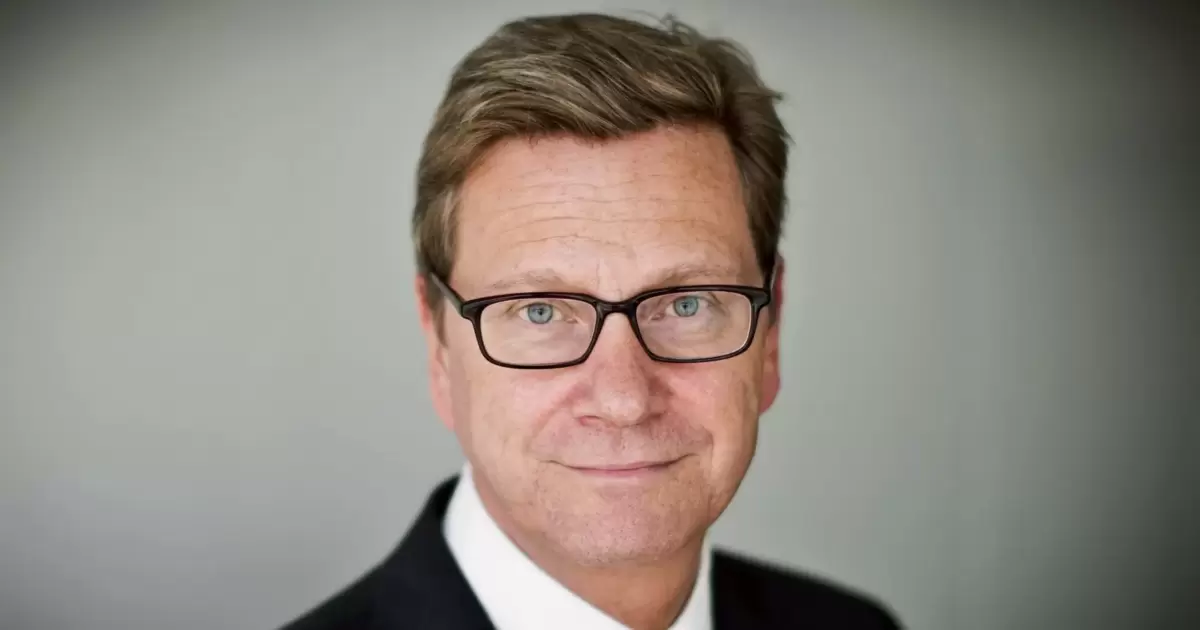
The Formative Years: Guido Westerwelle's Parents and a Childhood in Bonn
Guido Westerwelle, a pivotal figure in German politics, left an indelible mark as Vice-Chancellor and Federal Minister of Foreign Affairs. Yet, to truly understand the man and his political journey, one must delve into his early life, shaped significantly by his parents and the environment of his childhood in Bonn. Born on December 27, 1961, in the West German city of Bad Honnef, Guido's formative years were marked by a blend of legal influence and personal change that undoubtedly forged his resilient character.
His Guido Westerwelle Eltern, Heinz and Erika Westerwelle, were both accomplished lawyers. This professional background instilled an early appreciation for structure, debate, and the rule of law in their son. However, a significant turning point occurred when Guido was just eight years old: his parents divorced. Following the separation, Guido, along with his three brothers, moved to Bonn and lived with his father. This experience of navigating a significant family change at a young age likely contributed to his early development of independence and a pragmatic outlook, traits that would become hallmarks of his political career.
The move to Bonn was more than just a change of residence; it placed Westerwelle at the heart of West German political life. As the provisional capital, Bonn offered a unique atmosphere brimming with political discourse and opportunity, a fertile ground for a young mind beginning to explore the world. This environment, coupled with his family's legal background, provided a rich foundation for his intellectual and personal growth. For a deeper dive into the specific influence of his parents' professions, explore Guido Westerwelle: The Lawyer Parents Who Shaped His Early Life.
A Legal Lineage: How His Parents' Profession Paved the Way for a Political Career
The fact that both of Guido Westerwelle Eltern were lawyers is not merely a biographical detail; it's a foundational element that profoundly influenced his own educational and professional path. This strong legal lineage served as a clear signpost for young Guido, guiding him towards a rigorous academic pursuit that would ultimately underpin his political effectiveness.
After graduating from the Ernst-Moritz-Arndt Gymnasium in Bonn in 1980, Westerwelle wasted no time in following in his parents' footsteps, enrolling to study law at the prestigious University of Bonn. His legal education was comprehensive and demanding:
- He passed his First State Legal Exam in 1987.
- This was followed by the Second State Legal Exam in 1991, qualifying him fully to practice law.
- He actively practiced law in Bonn until 1996, gaining practical experience in legal application and advocacy.
- In 1994, he further distinguished himself by earning a Doctor of Law degree from the Fernuniversität in Hagen. His dissertation, "Party Law and Political Youth Organizations," was a clear indication that his legal mind was already deeply engaged with the mechanisms of politics.
This extensive legal background was more than just a career choice; it was a strategic preparation for public service. A lawyer's training instills critical thinking, the ability to dissect complex issues, construct compelling arguments, and understand the intricacies of legislation and governance. These skills are invaluable in the political arena, allowing for effective policy formulation, persuasive debate, and a deep understanding of constitutional frameworks. Westerwelle's legal acumen allowed him to navigate the often-turbulent waters of politics with precision and authority, from drafting legislation to articulating complex economic policies.
Beyond the Books: Early Political Stirrings in Bonn
While his legal education was a significant part of his development, Westerwelle's childhood in Bonn also ignited a passion for politics that ran parallel to his academic pursuits. During his school years, his interests were not solely confined to textbooks; he developed a keen interest in horseback riding and, more significantly, in politics.
Bonn, as the former capital, was a natural incubator for political ambition. It was a city where political discussions permeated daily life, offering a young, impressionable mind a front-row seat to the democratic process. This exposure likely fueled his early commitment to public service. Immediately after graduating from Gymnasium in 1980, the same year he began his law studies, Westerwelle joined the liberal Free Democratic Party (FDP).
His involvement was swift and impactful:
- He was one of the founding members of the Young Liberals, the youth wing of the FDP, demonstrating his early initiative and leadership potential.
- By 1983, he was elected leader of the Young Liberals, a significant achievement that showcased his ability to mobilize and inspire his peers.
- His ascent continued, and in 1988, he became a member of the FDP's executive committee, solidifying his position within the party's core leadership.
This early immersion in party politics, concurrent with his rigorous legal studies, allowed Westerwelle to develop a dual expertise: the theoretical grounding of law combined with the practical realities of political organization and strategy. His passion for politics was not a gradual awakening but an immediate and energetic dive into the heart of the democratic process, right from his base in Bonn. To understand more about his family and their broader impact, consult Who Were Guido Westerwelle's Parents? A Look at His Family Background.
The Interplay of Personal History and Public Service
Guido Westerwelle's early life experiences, particularly the divorce of his Guido Westerwelle Eltern and his subsequent upbringing with his father and brothers in Bonn, provided a unique crucible for shaping a future political leader. The resilience forged by early personal challenges, combined with the intellectual rigor inherited from his lawyer parents, created a highly driven and articulate individual.
His legal training wasn't just a backdrop; it was the lens through which he viewed policy and governance. This was evident in his passionate stance during the reunification of Germany in 1990. Westerwelle actively supported the controversial 1:1 exchange of East German marks for West German marks. While this decision created economic challenges for the former East Germany, Westerwelle argued it was an essential step for genuine reunification, demonstrating an early conviction in policy even when faced with opposition.
His political career showcased a steady and determined climb:
- Local Leadership: From 1993 to 2000, he chaired the FDP's Bonn city branch, indicating his grassroots commitment to the city that shaped him.
- National Influence: In 1994, he was appointed Secretary-General of the FDP, a crucial strategic role within the party.
- Parliamentary Ascent: He became a member of the Bundestag, the German parliament, in 1996, marking his entry onto the national political stage.
- Party Chairman: By May 2001, Westerwelle was elected chairman of the FDP, becoming the first party leader to explicitly position the FDP as a major political force, even running as the party's candidate for chancellor in 2002.
Westerwelle's political platforms often reflected a lawyer's analytical approach and a liberal's drive for reform. He campaigned vigorously against German bureaucracy and was a vocal critic of trade unions, advocating for reduced powers. His arguments for tax cuts and his proposals to weaken worker protection, particularly for small and medium-sized businesses, were rooted in a desire for greater economic flexibility and efficiency, typical of his FDP ideology. These positions, however contentious, were articulated with the precision and conviction honed through his legal education and early political engagements.
The FDP's significant gain to 14.5% of the votes in the 2009 parliamentary elections, leading to a coalition government with Angela Merkel's CDU/CSU, cemented his position. His subsequent appointment as Vice Chancellor and Minister of Foreign Affairs was a testament to his journey from a childhood in Bonn, marked by parental divorce and a strong legal heritage, to the highest echelons of German politics. His life offers a practical insight: personal challenges and professional foundational choices can often serve as powerful catalysts for public ambition and service.
Conclusion
Guido Westerwelle's journey from a childhood shaped by the divorce of his Guido Westerwelle Eltern and his legal education in Bonn to the corridors of power is a compelling narrative of resilience, intellect, and ambition. The professional legal background of Heinz and Erika Westerwelle provided a profound influence, guiding their son towards a rigorous legal education that became the bedrock of his political career. His formative years in Bonn, navigating family changes and discovering a passion for politics, instilled in him the drive and analytical skills necessary to rise through the ranks of the Free Democratic Party.
Ultimately, the early experiences and influences—the disciplined environment of a lawyer's home, the personal resilience developed after his parents' divorce, and the political vibrancy of Bonn—all converged to create the formidable leader Germany came to know. Westerwelle's story underscores how deeply childhood environments and parental legacies, even through their challenges, can shape the trajectory of a life dedicated to public service.